





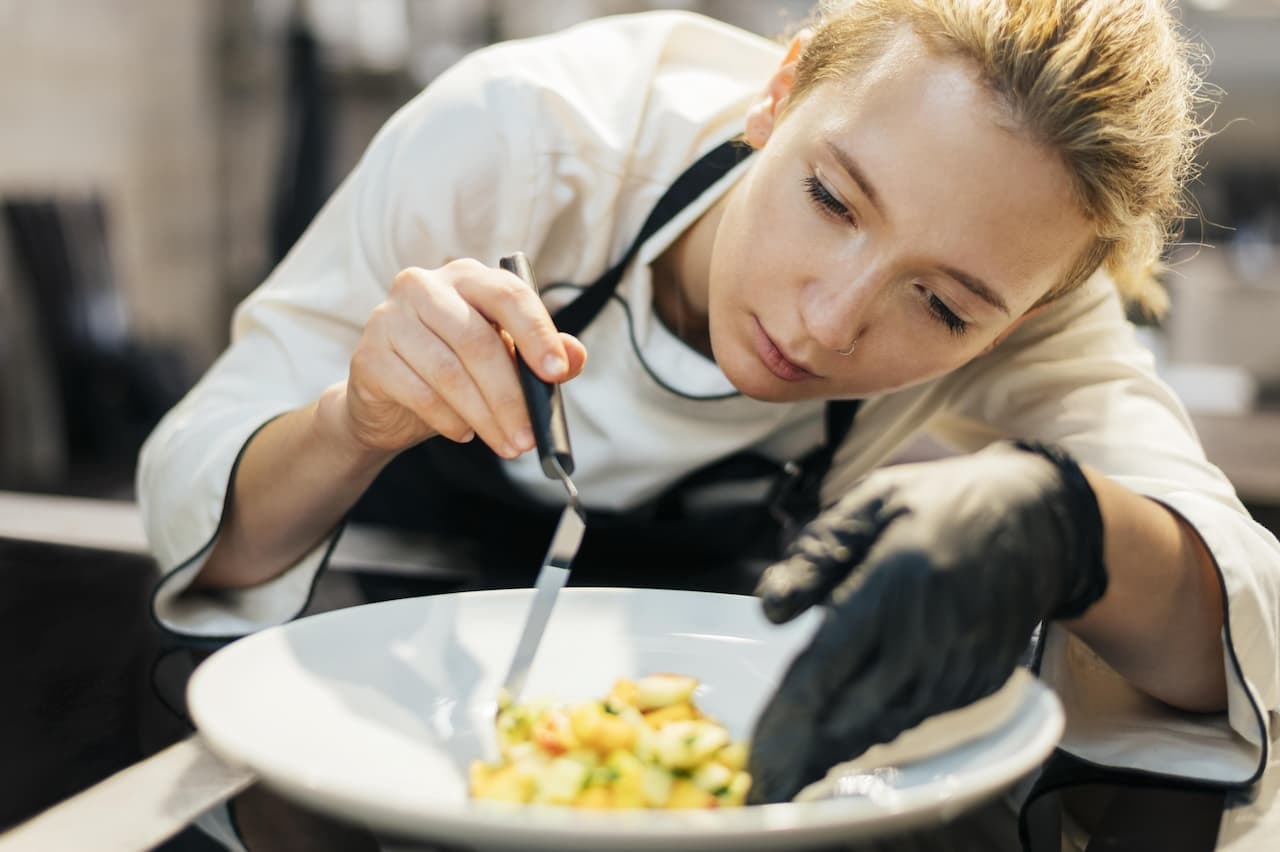
Professional development shouldn’t be limited to your primary career field. Learning diverse skills enhances cognitive flexibility, improves problem-solving abilities, and creates opportunities for career pivots or side ventures. Cooking courses offer particularly rich learning experiences that develop capabilities applicable across numerous contexts, from running a business to managing complex projects.
The kitchen serves as an excellent classroom for acquiring transferable skills. Unlike purely theoretical education, culinary training provides immediate practical application and feedback.
Building Foundational Culinary Knowledge
Professional cooking courses start with essential techniques that form the basis for countless dishes. These fundamentals prove more useful than memorizing specific recipes because they enable you to adapt and create:
- Knife skills and proper cutting techniques for efficiency and safety
- Understanding heat application and how different temperatures affect ingredients
- Basic sauce construction including emulsions, reductions, and thickening methods
- Protein cooking techniques for meat, fish, and plant-based alternatives
- Flavor balancing through seasoning, acid, sweetness, and fat
- Food safety and sanitation practices that prevent illness
Mastering these basics creates confidence to experiment and troubleshoot when things don’t go according to plan.
Time Management and Organization
Professional kitchens operate on strict timelines where multiple dishes must reach completion simultaneously. This reality teaches meticulous planning and organization that translates directly to project management in any field. You learn to break complex tasks into sequential steps, identify dependencies, and allocate time appropriately.
The French concept of “mise en place”—everything in its place—emphasizes preparation before execution. Successful cooks gather all ingredients, pre-measure what they need, and organize tools before starting to cook.
Cultural Appreciation and Global Perspective
Specialized courses like corso barbecue introduce students to specific culinary traditions and the cultures that created them. Learning Italian grilling techniques provides insight into how geography, history, and available ingredients shaped a cuisine.
Studying various cuisines builds cultural competency that proves increasingly important in diverse workplaces and global business environments. You learn that there are multiple valid approaches to solving problems.
Creativity and Innovation
Cooking combines science and art, requiring both technical precision and creative expression. Once you understand fundamental techniques, you can experiment with flavor combinations, presentation styles, and ingredient substitutions. This process develops creative thinking abilities that enhance innovation in any field.
The kitchen provides a safe space for experimentation where failures cost little. This willingness to test ideas without fear of catastrophic consequences fosters the risk-taking mentality that drives innovation.
Business and Entrepreneurial Skills
Serious cooking courses often include instruction on menu planning, cost control, and kitchen operations—all fundamental business concepts. Students learn to calculate food costs, price dishes profitably, manage inventory, and reduce waste. These skills apply directly to running any type of business.
Understanding the hospitality industry’s economics provides insights into service-based businesses generally. You see how customer experience, operational efficiency, and quality control interrelate.
Discipline and Attention to Detail
Culinary excellence requires precision and consistency. Recipes succeed when you follow measurements accurately, maintain proper temperatures, and time processes correctly. This attention to detail becomes habitual, improving your performance in other areas.
Professional cooking also demands physical discipline. You stand for long periods, work in hot environments, and maintain focus despite fatigue. This builds resilience and work ethic that transfer to any demanding career.
Communication and Teamwork
Advanced cooking courses often simulate professional kitchen environments where students must coordinate with others to produce meals. This collaboration requires clear communication, role clarity, and mutual support. These interpersonal skills prove essential in virtually any workplace.
Taking Your Skills Further
Cooking courses like corso bbq offer pathways for continuous learning. You can start with basic techniques and progress to specialized areas. The social aspects create networking opportunities and friendships.
Your Next Steps in the Kitchen
Investing time in cooking courses develops a remarkably broad skillset that enhances both personal and professional life. The combination of technical knowledge, creative expression, cultural awareness, and practical business skills makes culinary education uniquely comprehensive.